
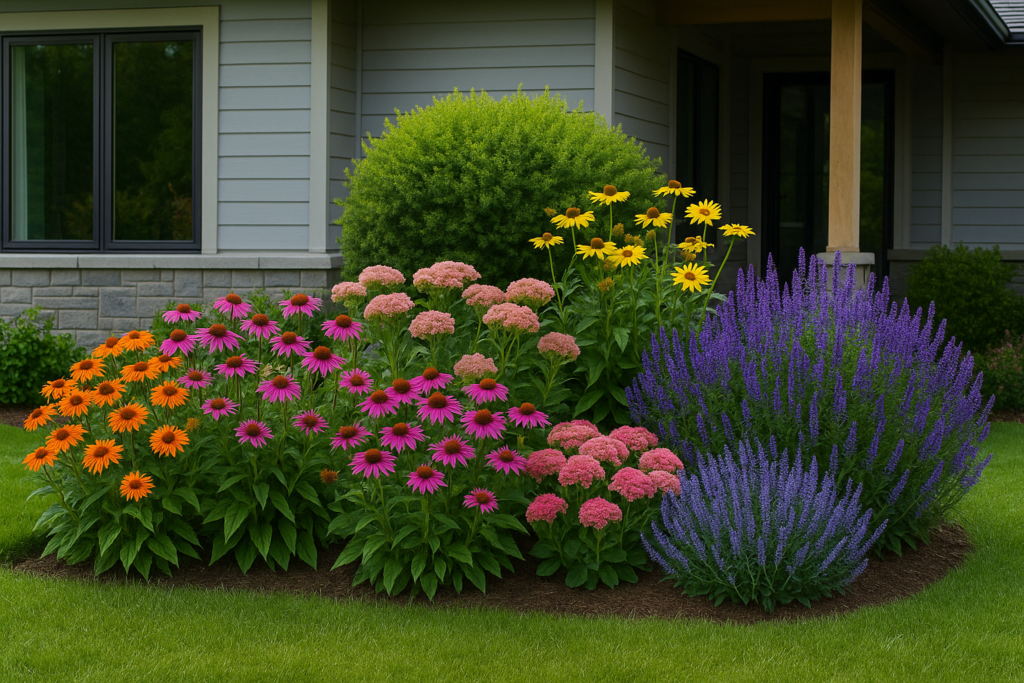
Introduction: Perennials as the Foundation of Lasting Outdoor Beauty
A vibrant and sustainable bright view landscape relies on smart plant choices—and few options are as reliable and beautiful as colorful perennial plants. These resilient, recurring blooms bring structure, color, and seasonal interest to outdoor spaces year after year, making them essential to landscape design that values both form and function.
Whether you’re designing a minimalist garden or a lush backyard retreat, this guide explores how to use colorful perennials to elevate your bright view landscape design while staying true to principles of sustainability, architectural harmony, and practical use.
Why Perennial Plants Are Ideal for Bright View Landscapes
Perennials offer a lasting solution for homeowners and designers looking for:
- Consistent seasonal color
- Low-maintenance beauty
- Ecological sustainability
- Architectural rhythm and repetition
Unlike annuals that require replanting each year, perennials grow back season after season, aligning perfectly with bright view landscape sustainability goals.
Selecting the Right Perennials for Maximum Impact
Color Selection Based on Landscape Goals
Different color palettes create different moods. Here’s how to match color to purpose:
- Bold and energetic: Coneflowers, red bee balm, black-eyed Susans
- Calm and relaxing: Lavender, Russian sage, blue salvia
- Elegant and modern: White phlox, silver Artemisia, ornamental grasses
For a clean, simple approach, see Bright View Landscape with Minimalist Style Options.
Long Blooming and Seasonal Interest
Choose varieties that bloom at different times to keep the landscape colorful from spring to fall:
- Spring: Creeping phlox, columbine
- Summer: Daylilies, Echinacea, yarrow
- Fall: Asters, sedum, goldenrod
Foliage Texture and Structure
Mix broad leaves, fine textures, and upright forms to add variety even when flowers are not blooming. Examples:
- Hosta (broad, lush leaves)
- Ferns (fine texture)
- Grasses like Calamagrostis (vertical structure)
Designing with Perennials in Bright View Landscapes
Layered Planting for Depth and Flow
Use a three-tiered approach:
- Back layer: Tall plants like Joe Pye weed, hollyhocks
- Middle layer: Mid-height bloomers like rudbeckia, salvia
- Front layer: Low-growing sedum, creeping thyme
This technique enhances the structured flow typical of bright view landscape applications.
Mass Planting for Color Blocks
Repeating large groups of one species creates visual impact. For example:
- 10–15 black-eyed Susans in a curved bed
- Border of purple coneflowers framing a pathway
See multi-zoned inspiration in Bright View Landscape Ideas to Refresh Your Backyard.
Framing Architectural Features
Use color beds to draw attention to entryways, windows, or patio edges. This aligns with best practices in landscape design architecture.
Sustainability Benefits of Perennials
Drought Tolerance and Native Adaptation
Many perennials are adapted to local climates, making them water-efficient and hardy.
- Coneflowers, coreopsis, and yarrow are examples that thrive with minimal watering
Pollinator Support
Bright perennials attract bees, butterflies, and hummingbirds—essential for local ecosystems.
Reduced Maintenance and Inputs
Once established, perennial beds require minimal fertilizing, pruning, or replanting—saving time and reducing environmental impact.
Creating Functional Outdoor Spaces with Perennials
Lounge and Dining Areas
Frame patios or seating areas with perennial beds for natural privacy and visual softness.
For ideas on integrating perennials into usable outdoor rooms, visit Bright View Landscape for Creating Outdoor Living Rooms.
Walkways and Borders
Plant low-growing varieties along walkways to create welcoming paths:
- Creeping thyme
- Catmint
- Lamb’s ear
Edible Perennials and Herbs
Add value and function with:
- Lavender
- Chives
- Rhubarb
Collaborating with a Landscape Contractor for Best Results
While perennials are homeowner-friendly, a professional landscape contractor can:
- Produce a landscape drawing tailored to space, sun, and soil conditions
- Select compatible plants by bloom cycle and color
- Plan for long-term care and seasonal rotation
Their expertise ensures your bright view landscape design grows beautifully over time.
Complementing Perennials with Structural Elements
Hardscaping
Use stone borders, pavers, or retaining walls to anchor perennial beds and keep lines clean.
Lighting
Highlight beds with low-voltage path lights or spotlights for nighttime enjoyment.
Glass Integration
Install an insulating glass unit in adjacent garden rooms or sunrooms to maintain interior comfort while enjoying year-round views of your perennial-rich landscape. Learn more at Insulating Glass Unit Explained: Key Functions & Structure.
Conclusion: Perennials as the Soul of a Bright View Garden
Colorful perennial plants are the beating heart of any well-designed bright view landscape. Their year-round beauty, ecological value, and architectural flexibility make them essential for creating outdoor spaces that feel as good as they look.
Whether you’re revitalizing a small yard or designing an expansive backyard retreat, these versatile plants help you achieve a beautiful landscape that stands the test of time—vibrant, sustainable, and full of life.