
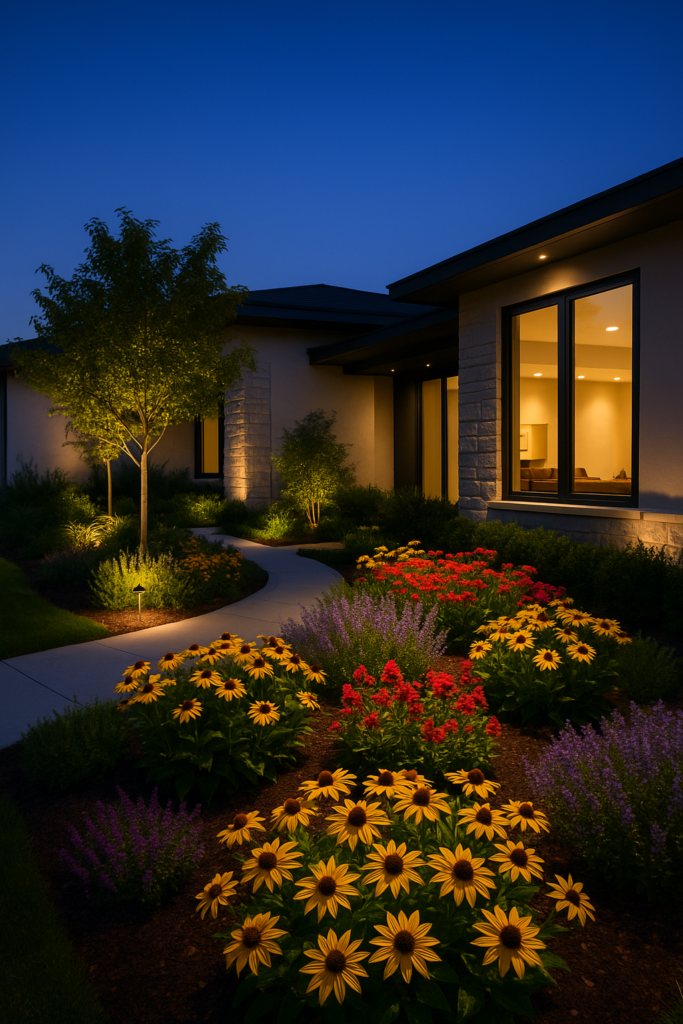
Introduction: Lighting That Defines the Landscape
A well-lit bright view landscape doesn’t just extend usability after dark—it reveals textures, silhouettes, colors, and focal points in stunning new ways. Landscape lighting, when composed correctly, highlights the design elements that define your space, while enhancing ambiance, safety, and sustainability.
This guide explores how to use lighting to amplify brightness and structure in your outdoor environment with expert strategies, lighting types, and composition techniques that align with modern landscape design and architectural aesthetics.
Why Lighting Matters in a Bright View Landscape
- Accentuates design composition and structure
- Enhances focal points and sightlines
- Improves safety along paths and stairs
- Extends the beauty and functionality of outdoor living areas
Lighting is the finishing touch to a beautiful landscape, transforming your space from day to night without compromising visual appeal.
Key Lighting Techniques for Landscape Impact
1. Uplighting
- Definition: Lighting directed upward to highlight trees, columns, or architectural walls
- Application: Emphasize tall elements like ornamental trees or sculptures
2. Downlighting (Moonlighting)
- Definition: Lights mounted high (in trees or eaves) that cast light downward
- Application: Simulates natural moonlight; great for patios or seating areas
3. Path Lighting
- Definition: Low fixtures that illuminate walkways
- Application: Guides movement and adds rhythm to the landscape
4. Wall Washing
- Definition: Soft, wide-angle lights cast against flat walls or hedges
- Application: Creates a bright, even glow ideal for defining boundaries
5. Silhouetting and Shadowing
- Definition: Placing lights behind or in front of objects to cast dramatic shadows
- Application: Adds depth and artistic drama, especially for layered plantings
Highlighting Composition with Lighting
Proper lighting enhances the spatial arrangement and intentionality behind your landscape. If your design includes multiple visual zones, ensure each is defined after dark.
Focal Points at Night
- Use warm, focused lighting to draw attention to trees, fountains, or art
- Add contrast with darker zones for spatial balance
Reinforce layout strategies in Bright View Landscape Composition for Bold Results.
Accentuating Layers
- Use uplighting for tall trees
- Spotlights for mid-level shrubs or ornamental grasses
- Path lights and small in-ground LEDs for groundcovers
Learn more about physical plant layering in Bright View Landscape Layering Techniques for Depth.
Choosing the Right Lighting Temperature and Intensity
Warm White (2700K–3000K)
- Best for comfort, patios, and relaxing areas
- Brings out natural wood tones and warm-colored blooms
Neutral White (3500K)
- Ideal for highlighting stone, gravel, or silvery plants
- Balanced, clean brightness without harsh glare
Cool White (4000K+)
- Use sparingly for dramatic contrast or accenting metal structures
Tip: Avoid mixing color temperatures within the same visual field.
Energy Efficiency and Sustainability
A bright view landscape values sustainability. Choose:
- LED fixtures for low energy use and long life
- Solar-powered lights for areas that get full sun
- Timers and motion sensors to reduce usage during inactive hours
These solutions align with broader bright view landscape sustainability practices, such as native planting and water conservation.
Integrating Lighting with Architecture and Glass
Enhancing Indoor/Outdoor Flow
Illuminate outdoor zones visible from inside the home to create visual extension and continuity.
Using Insulating Glass Units for Clear Views
Maximize the enjoyment of nighttime scenes without compromising interior energy efficiency. Learn more at Insulating Glass Unit Types and Their Core Components.
Common Mistakes to Avoid
- Overlighting: Too many fixtures create glare and wash out natural shadows
- Mismatched fixtures: Inconsistent styles or temperatures interrupt visual flow
- Poor fixture placement: Misaligned lights may cause uneven coverage or unintended shadows
Always test light placement before permanent installation.
Collaborating With a Landscape Contractor
Professional landscape contractors bring vision and expertise to your lighting plan. They offer:
- Custom landscape drawings that include lighting overlays
- Correct voltage planning and zoning
- Fixture selection that matches design architecture
They also ensure safety standards and local code compliance.
Conclusion: Illuminate With Intention
In a thoughtfully designed bright view landscape, lighting is not just functional—it’s expressive. It highlights bold shapes, enhances depth, and draws attention to the features that define your outdoor space.
Whether you’re aiming for elegant ambiance, safety, or drama, integrating expert lighting strategies will help you showcase your landscape at its very brightest—even after the sun sets.