
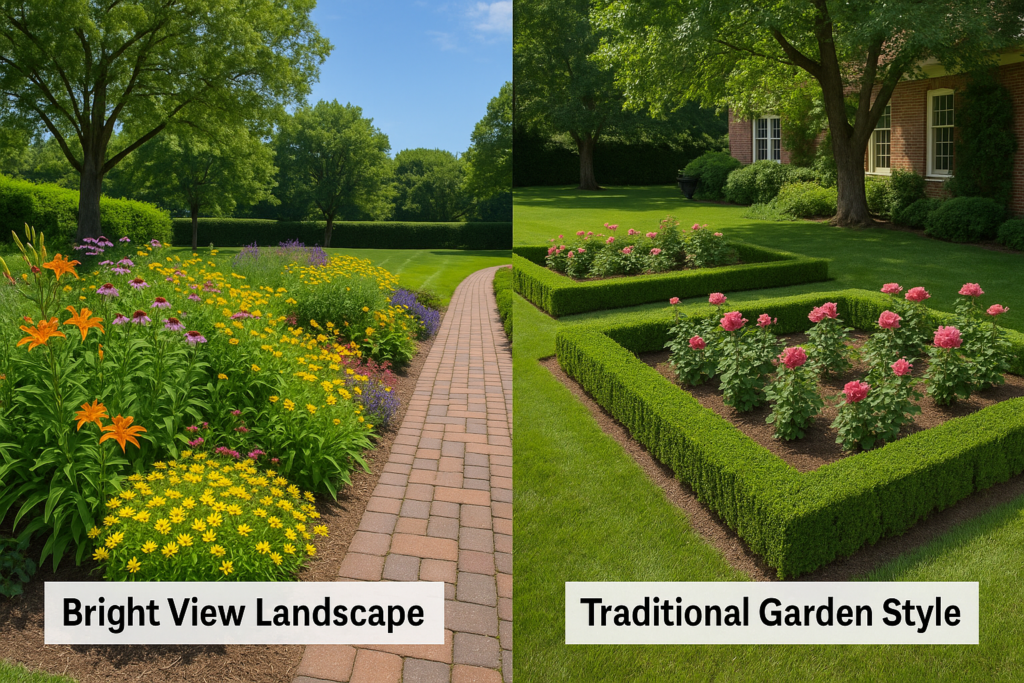
Introduction: Comparing Two Distinct Landscape Philosophies
When designing outdoor spaces, homeowners and professionals face a key decision: Should the landscape reflect modern design trends or embrace time-honored traditions? This question is best explored by comparing the bright view landscape style with traditional garden styles. While both aim to deliver a beautiful landscape, their methods, visual appeal, and long-term benefits differ significantly.
In this article, we examine the distinctions, advantages, and challenges of each design approach, helping you decide which best suits your property and lifestyle goals.
Defining the Bright View Landscape Style
A bright view landscape is a modern, holistic design philosophy that emphasizes vibrant color, open sightlines, architectural harmony, and functional space. It balances aesthetics and usability while promoting sustainability and low maintenance.
To better understand its foundation, see Bright View Landscape Key Characteristics Explained.
Hallmarks of Bright View Landscaping:
- Vibrant seasonal plant palettes
- Seamless integration with building architecture
- Open sightlines and clean geometry
- Functional outdoor zones for living and recreation
- Emphasis on sustainability and smart resource use
Traditional Garden Styles: A Legacy of Timeless Beauty
Traditional garden designs span centuries and cultures, often rooted in European, Asian, or Colonial-American landscapes. These gardens prioritize symmetry, ornamental details, and classical planting structures.
Common Features:
- Formal symmetry or axial alignment
- Boxwood hedges, stone fountains, and manicured lawns
- Historic or classical materials (brick, wrought iron, marble)
- Dense floral borders or themed areas (e.g., rose garden)
While undeniably charming, these styles require high maintenance and can lack the multi-functional flexibility that modern homeowners often seek.
Visual and Structural Design Differences
1. Color and Composition
- Bright View Landscape: Bold, contrasting colors in large swaths create visual energy. Designed with balance and seasonal continuity in mind.
- Traditional Garden: Often employs muted or monochromatic themes. Heavy reliance on green foliage and occasional color pops.
2. Layout and Flow
- Bright View Landscape Design: Prioritizes user movement and sightlines. Zones are connected with curved walkways and purposeful views.
- Traditional Styles: Feature formal paths, central axes, and sometimes compartmentalized areas that create a more static flow.
3. Architectural Integration
- Bright View Landscape Applications: Landscapes are built to complement modern homes, especially through materials and shapes that match contemporary architecture.
- Traditional Styles: Designs may contrast modern structures, appearing disconnected unless the home is styled to match.
For successful modern integration, designers often employ landscape design architecture strategies to ensure cohesion between indoor and outdoor elements.
Functionality and Lifestyle Considerations
Outdoor Living and Daily Use
- Bright View: Outdoor kitchens, lounge areas, and yoga zones make the space usable year-round. Designs prioritize comfort, usability, and connection to indoor life.
- Traditional: Generally intended for visual admiration or quiet walks. Less emphasis on multi-functional spaces.
See more in Bright View Landscape Core Benefits for Homeowners.
Maintenance Requirements
- Bright View: Utilizes low-maintenance plants and smart irrigation. Designed for longevity with minimal upkeep.
- Traditional: Often high-maintenance. Pruning, watering, and cleaning are ongoing and labor-intensive.
Sustainability and Environmental Impact
Bright View Landscape Sustainability
- Uses native and drought-resistant plants
- Incorporates insulating glass units and solar lighting
- Promotes water conservation with drip systems and rain gardens
Learn more about glass innovations at Insulating Glass Unit Explained: Key Functions & Structure.
Traditional Gardens
- May depend on non-native, high-maintenance plants
- Typically not designed with water efficiency or ecological preservation in mind
Design Process and Implementation
Bright View Landscape
- Begins with digital landscape drawing and zoning
- Collaboration between landscape contractors, architects, and homeowners
- Custom layouts with lighting, drainage, and irrigation systems
Traditional Garden Styles
- Often inspired by historic blueprints or cultural aesthetics
- Formal drawing and structural detailing
- Relies heavily on manual labor and time-consuming development
For more on smart design strategies, read Bright View Landscape Design Principles You Need to Know.
Which Landscape Style Is Right for You?
Choose Bright View If You:
- Want a visually dynamic, easy-to-maintain outdoor area
- Prefer spaces that blend indoor and outdoor living
- Seek sustainability and lower long-term costs
- Value modern aesthetics and innovative design
Choose Traditional If You:
- Love classical symmetry and timeless elegance
- Enjoy gardening as a hobby and don’t mind the upkeep
- Own a historically styled home or estate
- Prefer a design rooted in cultural or historical tradition
Conclusion: Harmonizing Style With Purpose
Both bright view landscapes and traditional garden styles offer distinctive benefits. The right choice depends on your lifestyle, architectural setting, and long-term maintenance preferences. For homeowners prioritizing usability, sustainability, and vibrant visual energy, bright view landscapes are the clear modern choice.
Traditional garden styles remain ideal for those who seek nostalgic charm and are willing to invest in their upkeep.
Ultimately, understanding these differences empowers you to make design decisions with confidence, ensuring your outdoor space is both beautiful and purposeful for years to come.